Coming December 2026. GeoRadX is pending regulatory approval (NAFDAC) and is not yet available for clinical use. Get notified →
Chest X-ray · Diagnostic Support

Intelligence calibrated to the patients it actually serves.

GeoRadX reads chest X-rays for signs of disease in seconds, on the hardware your clinic already runs. It calibrates to the population it sits in and keeps adapting as local data accumulates or the device moves.

The app installs freely. Activation requires clinic authentication and approval.

GeoRadX — reading · de-identified
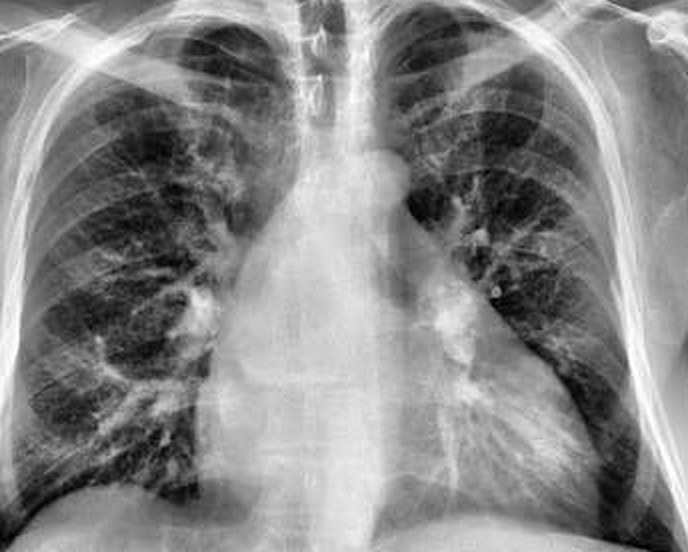
Chest X-ray, cropped to the chest cavity
Regions flagged
Lung field · Lower-mid · left of midline
Architecture loss
Directional grain ▼ 1.41 below
Texture uniformity ▲ 1.52 above
Lung field · Upper-mid · left of midline
Upper margin of a layering collection modifier
Vertical density change ▼ 0.80 below
Mediastinum · Lower-mid
Mediastinal filling
Texture uniformity ▲ 1.46 above
Tissue density position ▼ 2.31 below
A clinician reviews and makes the call.
How it reads

GeoRadX measures before it learns.

Most imaging AI is shown many films and learns whatever separates them, then returns one label for the whole image. GeoRadX divides the chest cavity into a 14×14 grid, sixteen pixels a side, and measures every region against its own baseline first. What a finding means depends on where it sits.

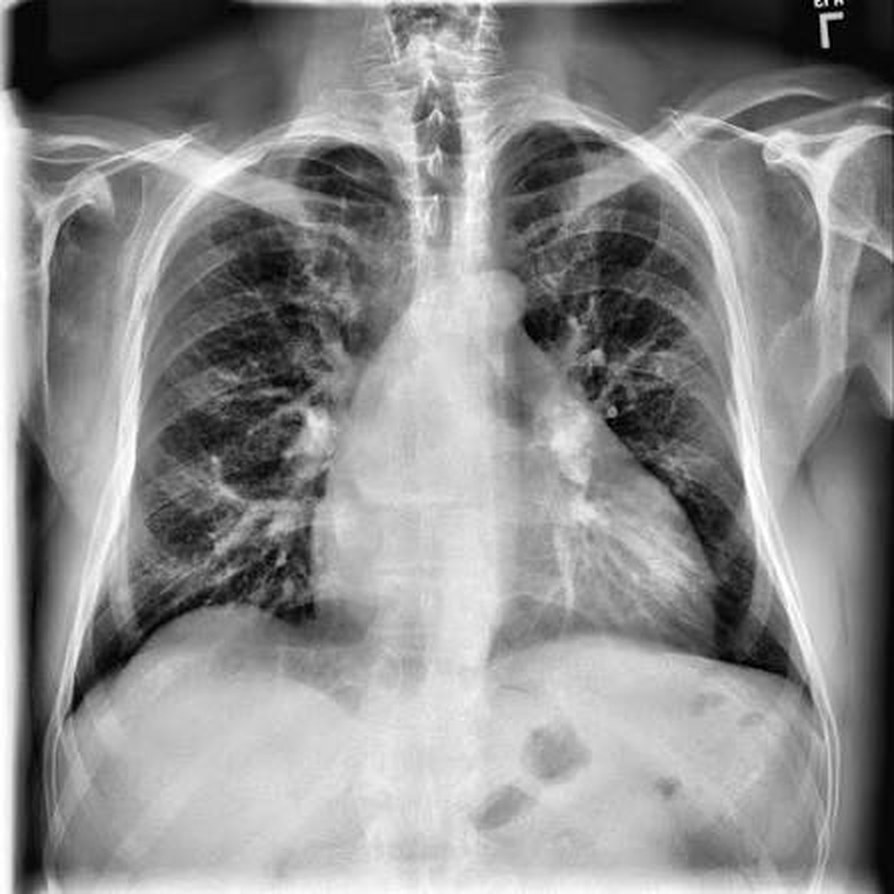
The crop matters: the frame is the chest cavity, not the film. Neck, shoulders, arms and abdomen never enter the read.

Full chest X-ray with the chest-cavity crop marked
Chest wall Peripheral lung Lung field Mediastinum

Film: NIH Clinical Center, ChestX-ray14. Select any region of the grid.

The same measurement, opposite meaning.

Directional grain falls away in the lung field when architecture is lost — 1.41 below baseline. In the mediastinum, where filling occurs around the dense central structures, the same measurement rises — 1.00 above. One rule cannot describe both, so GeoRadX does not use one.

Every region carries its own baseline, measured from healthy tissue. Rows are normalised per patient: row 0.00 is that patient's lung apex and row 1.00 their diaphragm, so the same row means the same anatomy on a tall chest and a short one.

Two regions report nothing.

At the chest wall the signature inverts: the texture measurement runs the opposite way, so a rule built in the lung field would give the wrong answer there. In the peripheral lung too few findings were recorded to derive a signature that held up under review. Both stay empty in version 1.

How it works →
The engine
DRF-MWU

GeoRadX runs on DRF-MWU, a hybrid transformer that fuses self-attention over grid cells with deterministic field physics and rigid attractor mechanics. Three primitives: attention coupled to physical attractor dynamics, a static reference against an evolving read, and vector representation governed by discrete topological rules.

The deterministic half is why the engine can be inspected rather than probed. It is also why it trains on hundreds to low thousands of films instead of hundreds of thousands, and why it runs on a phone.

Learn more →
Calibration

Built for where it sits.

A chest X-ray arrives as an image. GeoRadX converts it into a spatial problem before it reads anything: the film becomes vectors and tensors positioned in the grid, and the engine moves through that structure rather than across pixels.

What it compares against is the Master Grid, which holds the known variations of health and pathology for every cell position — and which grid it uses depends on where the device sits. Move the device and it detects the move and fetches the grid for its new location.

Building a grid for a new region takes around 350 films. That number is why this is possible at all: an architecture needing hundreds of thousands could only ever ship one global model. A single busy diagnostic centre reaches 350 in weeks.

March · read 1
───▶
Today · read 2
Cell-by-cell delta · 6 regions resolved, 2 reduced, 0 new

A film from March and a film from today are the same object.

Because both are topology, the engine compares them cell by cell instead of asking a clinician to hold two images side by side and remember the difference. What changed, where, and by how much.

Access

Nobody runs GeoRadX without a clinic behind them.

Two ways in.

Route 1

Register a clinic

Register a government-approved clinic. We verify it exists and is licensed, then grant it.

Route 2

Join an approved clinic

Its admin authorises your account and sends us that approval before we license your device.

Device licensed

Inside a clinic, the admin decides who has access. We don't.

What leaves the device.

Your images never do. Films stay on your hardware. What reaches our servers is vectors and tensors under a de-identified hash — the measurements, not the picture. They can't be turned back into an X-ray, and we hold no patient records.

What needs a connection, and what doesn't.

Reads run on the device. No lag waiting on a server, no stable connection required, low enough power draw to run on a phone.

Connection is needed for what sits on top: querying a region and getting it explained, comparing a read against the local or wider population, reading the engine's nuances for research, geolocation and version updates. These run through AIDA in our cloud. The engine underneath keeps reading either way.

Learn more →
Pricing

You only ever pay for readings

No per-person subscriptions. No export fees. Patient records, follow-up tracking, updates and support are included for everyone.

Free
Small and rural clinics
$0 / month
400 credits every month · about 20 readings
  • Runs your region's Master Grid
  • Full offline and online explainable breakdown
  • Patient records & follow-up progression tracking
  • Spend your credit on readings, AIDA, or both
  • Earn credit back on every reading you contribute
  • One device · free indefinitely
MOST CLINICS
Clinic
Pay only for what you read
$1.75 / reading
West Africa rate · volume discounts above $35/mo
  • Runs your region's Master Grid*
  • Patient records & follow-up progression tracking
  • Multiple accounts under your own clinic admin
  • Spend your credit on readings, AIDA, or both
  • Earn credit back on every reading you contribute
  • Unused contribution credit comes off next month's bill

One meter. That's the whole pricing model.
You buy usage credit. Spend it on readings, on AIDA, or on both — it's the same pool. And a paying clinic's readings are what fund free access for the clinics that can't pay.

* High-volume centres can run a Master Grid built for their own hardware and patients. Learn more about custom Master Grids →

Get GeoRadX

Bring a second read to your clinic

A small download that runs on the computer you already own. Available from this site only.

GeoRadX is not yet cleared for clinical use. You can download and register now — accounts open when regulatory approval is granted (expected December 2026).

1
Download & register
Create your account and submit your clinic's registration details.
2
We verify your facility
Our clinical team checks your registration — usually within 3 business days. GeoRadX is issued only to registered clinics and laboratories.
3
Activate and read offline
One-time activation binds GeoRadX to your device. After that, reads run with no internet.

Our mission

Half the world cannot readily get a radiologist's read. Why we built GeoRadX the other way around.

Read the mission

For doctors

Are you a licensed clinician? Join the paid reviewer network and help train the model that reads for clinics like yours.

Join the network
Separate service

GeoRX Research

Longitudinal population data built on AIDA — regional disease trends, cohort comparison and progression signal, for governments, research institutions and pharmaceutical partners.

Government · Institutions · Pharma
Explore GeoRX Research